The best first foods for a baby after 6 months: A mother’s comprehensive weaning guide
When your baby reaches six months, a new and very exciting stage begins in their developmental journey: the introduction of solid foods alongside milk. You may feel excited, and sometimes a little hesitant, about where to start and which foods are safest and most nutritious for your little one.
In this comprehensive article, we’ll explore the best first foods for babies after six months and how to introduce them safely and enjoyably.
When is a baby ready for solid foods?
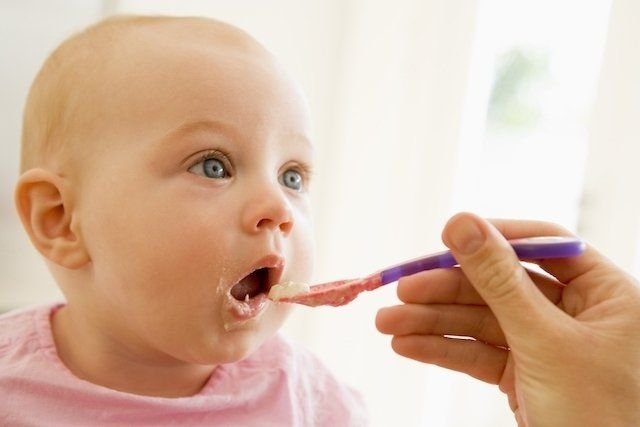
Besides reaching 6 months of age, look for these signs that indicate your baby is ready to start tasting food:
Ability to sit: Can sit steadily with minimal support and hold their head up.
Loss of the tongue thrust reflex: No longer automatically pushing food out of their mouth with their tongue.
Showing interest: Watching you attentively while you eat, or reaching out for your food.
Best First Foods for Babies (6 Months Old)
Mothers often prefer to start with soft, easily digestible, and hypoallergenic foods. Here are some of the best options:
Pureed or Cooked Vegetables (First Veggies)
Vegetables are low in sugar, which helps your baby accept natural flavors:
Butternut Squash: Naturally sweet, soft, and very popular with babies, it’s also rich in Vitamin A.
Carrots: After being thoroughly boiled and smoothed, they are an excellent choice and rich in vitamins.
Sweet Potatoes: Rich in alpha-carotene and fiber, they have a warm flavor and a wonderfully creamy texture when mashed.
Zucchini: Very light on the stomach and easy to digest.
- First Fruits
Fruits are characterized by their delicious flavors that children readily accept:
Bananas: An ideal and easy choice; you can easily mash them without cooking.
Avocado: A nutritional treasure full of healthy fats beneficial for a child’s brain development, and its creamy texture makes it ideal for mashing.
Apples or Pears: They should be boiled or steamed until completely soft, then mashed to ensure they are easy to swallow.
- Fortified Baby Cereals
Iron-fortified rice or oats: These are often the first foods pediatricians recommend to replenish a baby’s iron stores after six months. They can be mixed with breast milk or formula to create a texture the baby will find familiar.
Two Main Ways to Introduce Food at Six Months
You can choose the method that best suits your style and your baby’s:
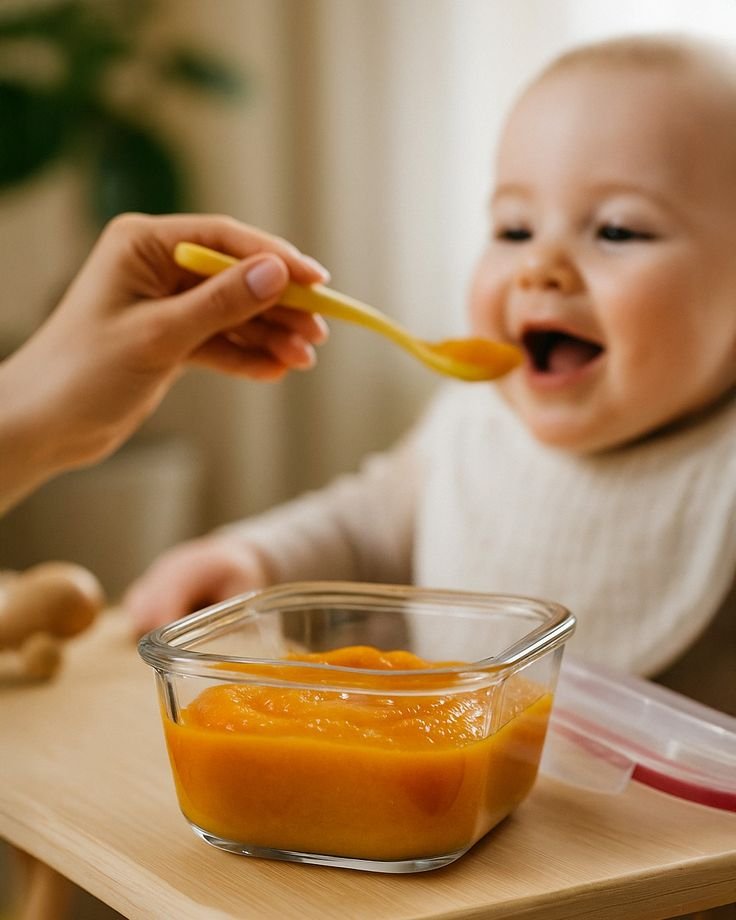
Pures: Serve food mixed with a spoon in a very smooth puree, gradually increasing the consistency.
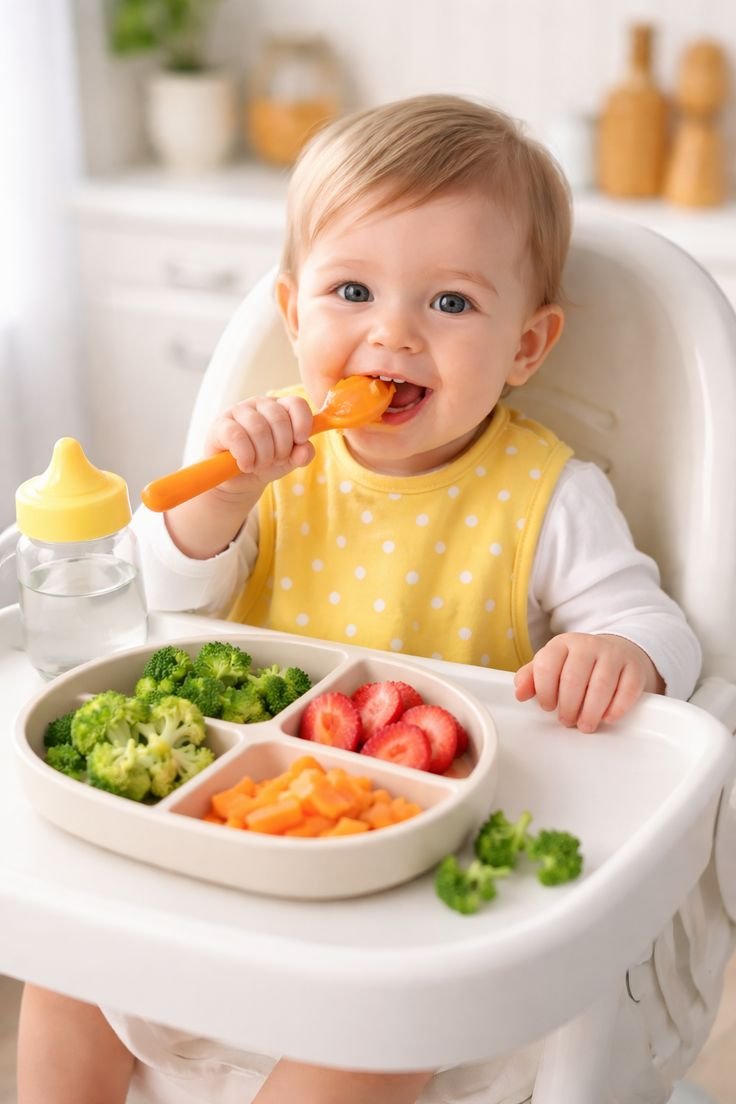
Baby-Led Weaning (BLW): Offer soft, finger-sized pieces of food that the baby can safely grasp and eat (such as well-cooked sweet potato wedges or slices of ripe avocado). Golden Rules to Follow When Starting:
The 3-Day Rule: When introducing a new food (especially foods that may cause allergies, such as eggs, peanuts, or fish later on), offer only one new food for three consecutive days before introducing another. This allows you to observe whether your baby experiences any allergic reactions (such as rashes or stomach upset).
Start with One Meal: Initially, one or two teaspoons once a day is sufficient. The main goal is to “taste and explore,” not to fill up, as milk remains the primary food source.
Don’t Add Salt or Sugar: A baby’s stomach, kidneys, and digestive system cannot tolerate spices, sugar, or salt during their first year.
Conclusion: The journey of introducing solid foods is a fun and wonderfully messy experience! Don’t worry if your baby refuses food at first; they may need to try a new taste 10 to 15 times before accepting it. Enjoy these moments and don’t forget to take cute pictures of your baby discovering flavors for the first time!